How Manufacturing Companies Use LMS Platforms to Stay Safe and Compliant
In the manufacturing industry, safety is more than a policy. It is a lifeline. Workers operate heavy machinery, follow strict production standards, and navigate environments where a small mistake can have major consequences. With fast-changing regulations and compliance requirements, strong training programs are essential.
A Learning Management System (LMS) such as DigitalChalk helps manufacturers deliver consistent, high-quality training at scale. For manufacturing companies, an LMS is not just a training tool. It is a strategic system that strengthens safety, quality, and compliance. This article explores how manufacturers use LMS platforms to improve workplace safety, stay compliant, and build more resilient operations.
Why Manufacturing Companies Need Robust Training and an LMS
Manufacturing organizations operate under constant regulatory pressure. OSHA, ISO, and federal and state safety requirements all demand accurate, timely, documented training. Traditional training methods such as paper checklists, classroom sessions, and spreadsheets cannot keep pace across multiple plants, shifts, and roles.
A modern LMS allows manufacturers to automate compliance tracking, standardize training, prepare for audits, and measure effectiveness. It transforms training into a repeatable and scalable process so every employee receives the right training at the right time.
How LMS Platforms Support Safety and Compliance in Manufacturing
Standardized Learning Across Sites and Roles
Provide consistent training aligned with company-wide safety protocols, regardless of location or shift.
Role-Based Training Paths
Assign training modules based on job function so every employee receives training relevant to their responsibilities.
Automated Certification and Renewal Tracking
Reduce manual admin by automating expiration reminders and centralizing compliance records.
Mobile and On-the-Floor Access
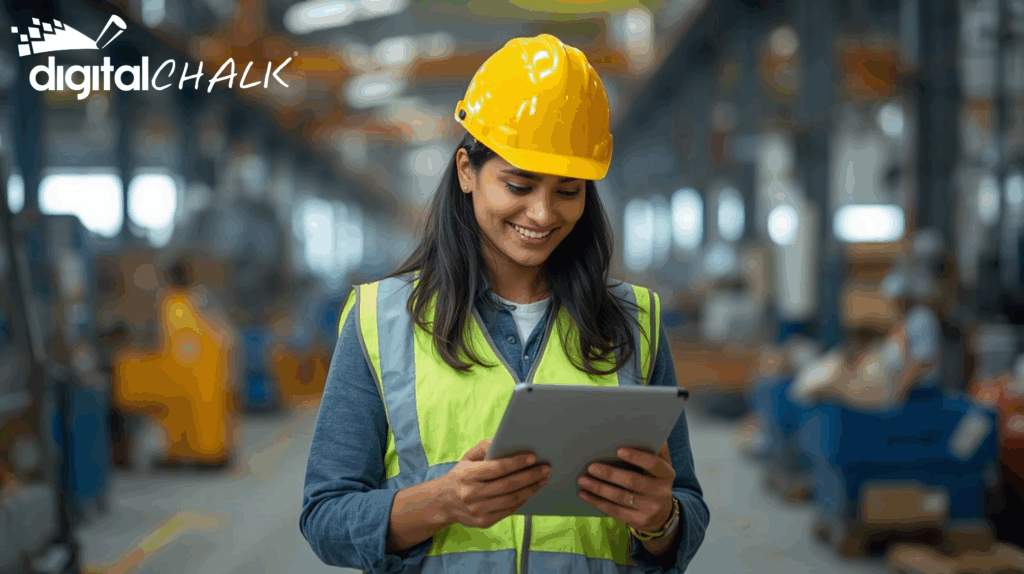
Deliver training anywhere, whether on a tablet during a shift or on a mobile device between tasks. Read more → Mobile Learning: The Value of Training on the Go
Engaging Content That Improves Retention
Use microlearning, scenarios, and gamification to make safety training more effective.
Explore more → Does Gamification Boost eLearning Outcomes?
Adaptability to Changing Regulations
Update training quickly when OSHA, ISO, or internal safety protocols change.
Benefits of Using an LMS for Manufacturing Companies
An LMS improves safety, quality, and workforce readiness across a manufacturing organization. Consistent training reduces safety incidents, improves job preparedness, and strengthens regulatory compliance. Standardized content helps maintain product quality and reduce production errors.
An LMS also improves onboarding and upskilling for new or reassigned employees so they reach productivity faster. Learn more → Employee Upskilling vs. Reskilling: What’s the Difference and Why It Matters
A centralized LMS also makes it easier to train large, distributed teams across multiple plants, shifts, and regions.
Manufacturing-Specific Considerations When Choosing an LMS
Integration Capabilities
Look for systems that connect with HRIS, ERP, and manufacturing software.
Compliance-Centric Tools
Certification tracking, audit-ready reporting, and automated reminders are essential.
Industry-Specific Content
Content for equipment safety, machine handling, lockout/tagout, and quality control.
Role-Based, Multi-Language, and Mobile Access
Support for diverse teams working across global sites.
Analytics and Reporting
Insights into readiness, training effectiveness, and compliance status.
Easy Content Updates
The ability to adjust training quickly as regulations change.
Building a Safer, Smarter Manufacturing Future
Safety and compliance form the foundation for operational excellence in manufacturing. The right LMS helps companies standardize training, track certifications, stay audit-ready, and protect their workforce.
For manufacturers using DigitalChalk, aligning LMS capabilities with safety and compliance goals creates real business value. The result is fewer safety incidents, stronger regulatory confidence, and a more capable workforce.
DigitalChalk helps manufacturing organizations keep teams safe, skilled, and compliant. Simplify compliance, automate certifications, and empower your workforce with training that works.
Explore more → DigitalChalk for Manufacturing
FAQ
Why do manufacturing companies need an LMS for safety and compliance?
Manufacturing companies need an LMS to manage safety training, document compliance, and ensure workers stay current on OSHA, ISO, and company-wide requirements. An LMS for manufacturing centralizes training, tracks certifications, and reduces the risk of safety incidents across multiple plants and shifts.
How does an LMS help manufacturing teams stay audit-ready?
An LMS keeps all training records, certifications, and completion data in one system. Automated tracking and audit-ready reports make it easy for manufacturers to prove compliance during inspections, audits, or regulatory reviews without relying on spreadsheets or manual processes.
What features should manufacturers look for in an LMS?
Manufacturers should look for features such as automated certification tracking, mobile access, OSHA and ISO-ready reporting, integration with HR or ERP systems, and role-based learning paths. These capabilities ensure the LMS supports safety, compliance, and ongoing workforce development.